


Gulag
Categories: Home -> Dictionary
Last updated: 2026-07-18
The Gulags (acronym of Glávnoye Upravléniye Ispravítelno-Trudovýkh Lagueréi, “Main Administration of Corrective Labor Camps”) were the system of forced-labor camps and prisons of the Soviet State, active mainly between 1918–1920 and, in their most massive and organized form, between 1929 and 1956 (with remnants until 1960).
What they were in practice
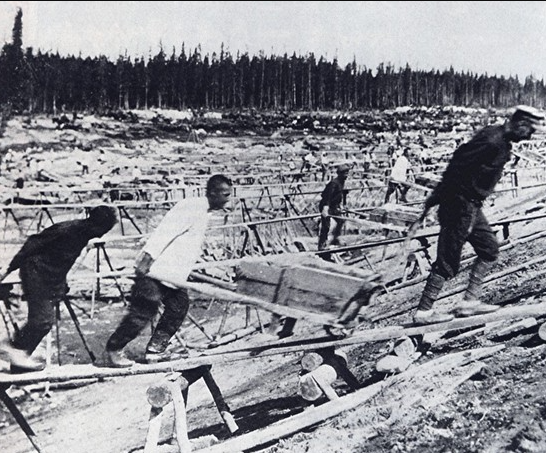
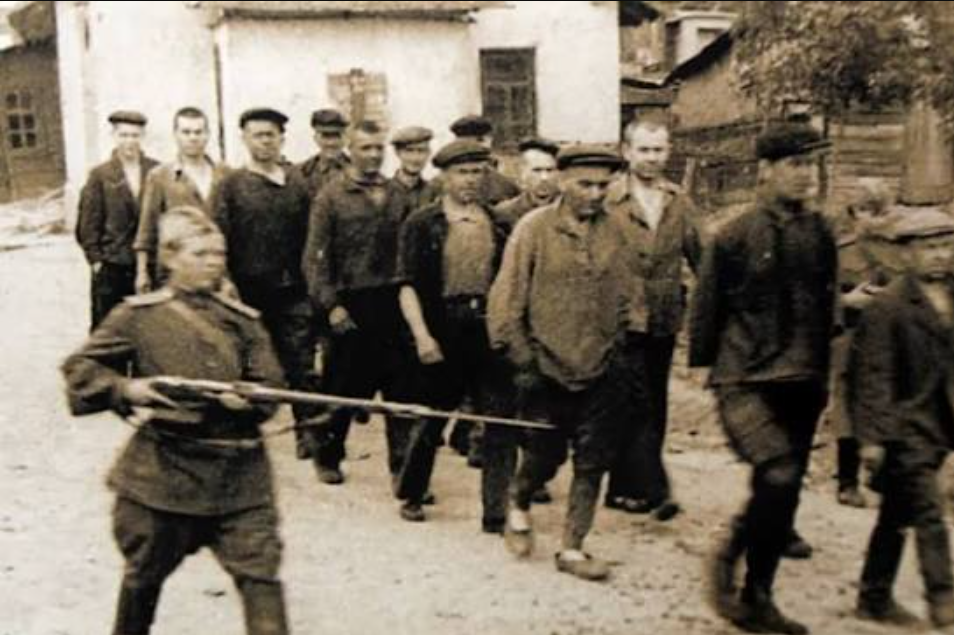
They were not conventional prisons. They were a network of concentration and forced-labor camps scattered throughout the USSR (Siberia, the Far East, Kazakhstan, the Arctic, etc.). The inmates —called zek— had to fulfill extremely hard work quotas in mining, logging, construction of canals, railways, and industrial works under conditions of hunger, cold, disease, and systematic violence. The official objective was “reeducation through labor”; the reality was the extraction of cheap (almost free) labor and the elimination or neutralization of real or potential opponents.
Who ended up there
- Political prisoners (accused of “counterrevolution,” “Trotskyism,” “espionage,” etc.).
- Kulaks (relatively better-off peasants) during forced collectivization.
- People of “suspect” nationalities (Poles, Balts, Chechens, etc.).
- Common criminals.
- And, in periods of mass terror (especially 1937–1938), arbitrary quotas of arrests.
It is estimated that between 18 and 20 million people passed through the system over its existence. Direct and indirect deaths are estimated in several millions (the most solid figures from historians such as Anne Applebaum, Robert Conquest, or the Soviet archives themselves opened after 1991 range between 1.5 and 2.5 million dead in the camps proper, not counting the famines and extrajudicial executions linked to the same apparatus).
Economic and philosophical perspective (Austrian approach)
From the tradition of the Austrian School (Mises, Hayek, Rothbard), the Gulags are not an “excess” or a “deviation” of socialism, but a logical consequence of the abolition of private property and of rational economic calculation.
When the State appropriates all the means of production and eliminates the free price system, it cannot allocate resources efficiently.
The only way to force the mobilization of labor toward projects that the market would never have financed (useless canals, mines in uninhabitable zones, industrialization at any price) is direct coercion.
Forced labor becomes the brutal substitute for wages and voluntary productivity.
It is the extreme version of what Mises described in Socialism (1922) and Hayek in The Road to Serfdom: when the price mechanism is destroyed, individual liberty is also destroyed and the door is opened to totalitarian planning.
In philosophical terms, the Gulag represents the radical negation of the dignity of the person as an end in itself.
The individual becomes a disposable production input at the service of an abstract collective plan. There are no natural rights prior to the State; there is only the will of the Party.
Difference from other camp systems
Unlike the Nazi camps (oriented primarily to racial extermination) or the prisons of other authoritarian regimes, the Soviet Gulag systematically combined the economic logic of forced surplus extraction with the political logic of mass terror. It was, for decades, a central institution of the Soviet economic and political system, not a mere appendix.
In summary: the Gulags were the most visible and brutal materialization of what happens when one tries to build a society without private property, without prices, and without limits on the State’s power over the individual.
Photos
Example photos of easy access on the internet.
| Gulags |
|---|
 |
 |
Categories: Home -> Dictionary
Last updated: 2026-07-18
| | | |
This site was written based on publicly available free articles from the internet.
The content of this site is available under the: Creative Commons Attribution 4.0 International (CC BY 4.0) license.
You can freely copy, redistribute and modify the material, as long as the source is mentioned: liberwiki.com