Dispersed Knowledge and Spontaneous Order
This article is part of the Basic Liberalism Course -> Module 5: Notions of Austrian Economics
Last updated: 2026-05-23
Note: The following 3 concepts are inseparable; talking about one directly implies talking about the others.
- Dispersed knowledge
- Spontaneous order
- Economic calculation
Dispersed Knowledge
Dispersed knowledge is one of the most important and revolutionary concepts of the Austrian School, developed by Friedrich A. Hayek in 1945.
Precise and Austro-economic definition:
The dispersed knowledge is the fact that the knowledge relevant for "economic" and "social" action is dispersed, fragmented, and localized in millions of individuals, in the form of practical, circumstantial, and often tacit information (not easily verbalizable).
Another main point is that it is changing, what is needed this week is no longer needed next week, what is needed today will no longer serve tomorrow.
No one —neither a committee of experts, nor a minister, nor a central algorithm— can possess even a significant fraction of that knowledge in a single place.
Thus, the dispersed knowledge is the fact that the knowledge relevant for economic and social action is:
- dispersed : Among each of the millions of individuals, each with their distinct needs and tastes.
- fragmented : Those millions of individuals can also be grouped by specific needs and tastes.
- localized: To add more complexity to the matter, this dispersion and fragmentation may be needed in different zones, provinces, localities or neighborhoods, blocks, houses or a specific person in a country.
- changing : To close the topic of the great complexity of what we are talking about, it changes constantly, what is needed at this very moment is already useless if obtained in a few hours.
Types of knowledge that Hayek distinguishes:
-
General scientific knowledge
The one found in books, universities and laboratories (the one planners believe is the most important). -
Knowledge of the particular circumstances of time and place (the truly decisive one)
Everyday examples:- A merchant in a town knows that today there is an excess of ripe tomatoes and can buy them cheap before they spoil.
- A mechanic in charge of ambulance service in a city discovers that a certain spare part fails in ambulances of a certain brand due to the quality of local fuel. So he recommends loading fuel in another locality, to not interrupt the service, until the issue is resolved.
- A farmer in some rural area knows that this week his wheat is optimal for harvest due to the rains of the previous week. If he harvests in 2 weeks the quality of the food will not be good.
-
The owner of a pharmacy knows that due to the characteristics of the climate in his region he was going to need more of a certain medicine in 2 weeks, however right now the climate conditions changed and he will need it tomorrow.
This knowledge is local, temporal, subjective and changing. It changes minute by minute.
-
Tacit knowledge (Michael Polanyi + Hayek)
The one where “we know more than we can say”: skills, intuitions, “nose” for business, ways of dealing with difficult customers, etc.
Spontaneous Order
The spontaneous order is one of the deepest and most central concepts of the Austrian School of Economics, especially developed by Friedrich A. Hayek (and with roots in Carl Menger, the founder of the school).
Simple but precise definition:
The spontaneous order is a complex and highly functional pattern of social cooperation that emerges without anyone having intentionally designed it.
It arises from the free interaction of thousands or millions of individuals who pursue their own ends (selfish or not), using dispersed and fragmented knowledge that no one can possess in its entirety. The result is an order that is more efficient and adaptive than any centrally imposed order.
It is not chaos, nor is it a constructed order (like the one a central authority tries to impose). It is a self-generated order that forms from abstract rules of conduct (mainly rules of private law: property, contract, liability), which allow extended cooperation between strangers.
Hayek contrasts it with the made order (taxis) —the one designed by an organizing mind— and calls it cosmos or spontaneous order. This order is much more complex than any human mind can encompass because it uses the dispersed knowledge that is distributed among millions of people and that can never be centralized.
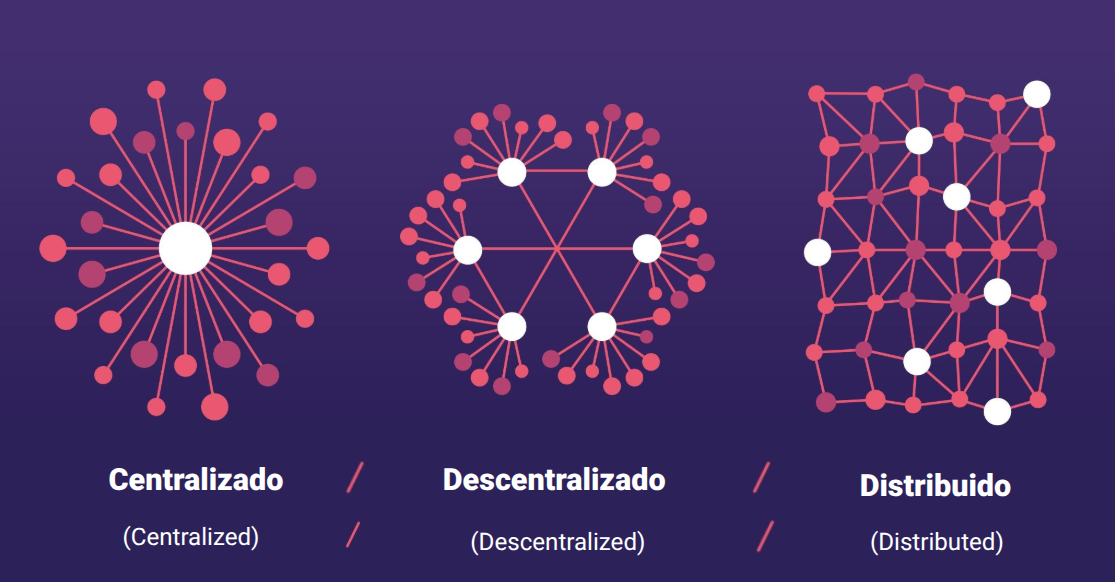
The most complex and efficient institutions of humanity are the result of human action, but not of human design. They arise in a decentralized way when individuals follow simple rules of conduct in their local environments, adapting to the dispersed knowledge that no one possesses in its entirety.
Examples
1. The price system in the market economy (the economic example par excellence)
Imagine a sudden shortage of a rare mineral used in electric car batteries occurs. No bureaucrat or central committee knows exactly how much, where, and for what it is needed. However, the price of that mineral rises immediately.
- Consumers who can do without it reduce their use.
- Producers look for substitutes or increase production where it is profitable.
- Innovators develop alternative technologies.
- Savers direct capital toward the companies that best solve the problem.
All this happens without anyone ordering “reduce consumption by 12%!” or “build three new mines in such a place!”. The price acts as a "signaling system" that coordinates the dispersed knowledge of millions of people. That is spontaneous order in action. When the State intervenes with price controls or subsidies, it distorts those signals and destroys part of that order.
Ultimately, if the sought good is very expensive it can still be obtained because there is stock of it. Something that with other systems would directly be impossible to obtain.
2. The evolution of money as a spontaneous institution
Money was not invented by a king or by a brilliant economist at a design table. It emerged spontaneously throughout human history.
In different civilizations, certain commodities (livestock, precious metals, finally gold and silver) were selected by the very people who traded because they possessed the best properties as a medium of exchange: divisibility, portability, durability, relative scarcity and accepted subjective value.
No one planned “let’s create an institution called money”. Simply, those who used the most “monetary” goods had an enormous competitive advantage in exchange. Gold and silver ended up being money not because someone decreed it, but because they survived the spontaneous evolutionary process of cultural selection (similar to natural selection in biology, a concept Hayek deeply admired).
When States end up monopolizing the issuance of money and manipulate it, they are replacing a highly efficient spontaneous order with a constructed order that generates economic cycles, inflation and loss of value.
| Dimension | Centralized System | Spontaneous System (Market / Evolution ) |
|---|---|---|
| Information Flow | Vertical and slow (subject to statistical bottlenecks). | Horizontal, instantaneous and decentralized (Prices / Chemical signals). |
| Adjustment Mechanism | Coercion and rigid bureaucratic mandates. | Constant adaptation to circumstances of time and place. |
| Resilience | Fragile. If the planner's head fails, the system collapses. | Robust. If one part fails, local agents recalculate and adapt immediately. |
What is the relationship between "Dispersed Knowledge" and "Spontaneous Order"
The relationship between "Dispersed Knowledge" and "Spontaneous Order" is the core of Hayek's work. They are not simply two complementary concepts; they are two sides of the same coin. There exists between them a strict cause and effect relationship.
1. The Statement of the Problem: Dispersed Knowledge (The Cause)
Hayek explains that the information necessary to coordinate society does not exist in a unified way. It is practical, local, changing and fragmented knowledge in the minds of millions of individuals.
Since this knowledge is impossible to summarize or centralize in a ministry or in a supercomputer, humanity faces a dilemma: How do we avoid absolute chaos if no one has the complete map of reality?
2. The Emergence of the Solution: Spontaneous Order (The Effect)
This is where spontaneous order appears as the inevitable response to the knowledge problem. Since no central mind can dictate what each person must do, the only way human beings manage to coordinate is by interacting freely under general rules of conduct (such as the right to property and the fulfillment of contracts).
From those millions of decentralized interactions emerges a structural order that was not designed by anyone.
- The price system, language or customary law are complex structures that arise precisely because knowledge is dispersed. If knowledge were absolute and centralizable, spontaneous order would be unnecessary; we could live under perfect central planning.
The Fusion of Both Concepts: The Market as an Information Processor
When we unify both ideas, we discover that for the Austrian School the market is not merely a place of physical exchange, but an evolutionary system of communication.
- Dispersed Knowledge is the informational fuel of the system (the needs, scarcities and subjective valuations from every corner of the planet).
- Spontaneous Order is the network that processes that fuel through prices, allowing society to coordinate in a harmonious way without the need for an economic dictator.
| Concept | Role in Hayek's Theory | Biological / Systemic Metaphor |
|---|---|---|
| Dispersed Knowledge | The initial problem / The input data. | The local stimulus received by a single cell or a single bird in a flock. |
| Spontaneous Order | The resulting solution / The output structure. | The fluid movement pattern adopted by the entire flock in the air. |
This article is part of the Basic Liberalism Course -> Module 5: Notions of Austrian Economics
| Previous Topic | Next topic | |
|---|---|---|
| <- Subjective Theory of Value | <--> | Economic Calculation-> |
| |
|  |
| |
|