


Friedrich Hayek
This article is part of the Basic Course on Libertarianism and the Austrian School of Economics-> Module 4: Main Schools of Economics
Last updated: 2026-05-16
Life
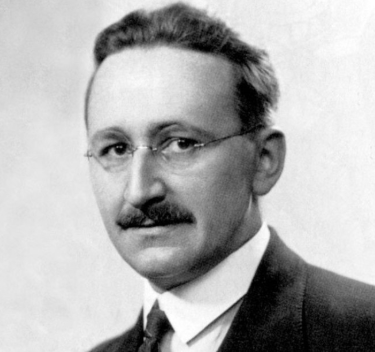
Friedrich August von Hayek (1899–1992), one of the intellectual giants of the twentieth century, a fundamental pillar of the Austrian School of Economics.
Origins and formation (Vienna, 1899–1920s)
Hayek was born on 8 May 1899 in Vienna, into a cultured and intellectual family of the Austro-Hungarian Empire. His father was a physician and botanist; the family environment exposed him from a young age to science and culture. Initially interested in biology, the traumatic experience of the First World War (he fought on the Italian front, where he was wounded and lost hearing in one ear) drove him toward the social sciences. He wanted to understand how to avoid wars and crises.
He studied Law and Economics at the University of Vienna, receiving doctorates in 1921 (law) and 1923 (political science). There he attended the private seminar of Ludwig von Mises, who became his decisive mentor. Mises steered him away from the Fabian socialism that initially attracted many young Viennese and showed him the failures of interventionism. Hayek directed the Austrian Institute for Business Cycle Research (1927–1931), where he deepened the Austrian theory of the business cycle.
Success in London and the critique of socialism (1930s–1940s)
In 1931, invited by Lionel Robbins, he moved to the London School of Economics (LSE), where he taught until 1950. He became a British citizen in 1938. There he fought intellectual battles against John Maynard Keynes. His book Prices and Production (1931) set out how artificial credit expansion generates “malinvestments” and economic cycles (boom–bust).
His most influential work of that era was The Road to Serfdom (1944), written during the Second World War. In it he warned that central planning (whether Nazi, Soviet, or extreme social-democratic) inevitably leads to the loss of individual liberty and to totalitarianism. The book was a bestseller and alerted the West to the dangers of collectivism.
Nobel (1950s–1992)
In 1974 he received the Nobel Prize in Economics (shared with Gunnar Myrdal) for his pioneering work in monetary theory, economic fluctuations, and the interdependence of economic, social, and institutional phenomena. The Nobel especially recognized his emphasis on dispersed knowledge: no one possesses all the information; prices act as signals that coordinate millions of individual actions spontaneously.
Legacy in the Austrian School and beyond
Hayek was not only an economist: he was a social philosopher who integrated history, psychology, evolutionary biology, and law. His concept of spontaneous order (an extension of Adam Smith’s “invisible hand”) explains how institutions arise from human action but not from human design. He criticized “rationalist constructivism” (the illusion that we can redesign society like an engineer).
In Austrian economics, his contribution to the economic calculation problem (following Mises), capital theory (the Hayekian triangle), and the importance of subjective and dispersed knowledge remains fundamental. He influenced Thatcher, Reagan, and the liberalizing wave of the 1980s–90s, though he always considered himself a classical “Whig liberal,” not a radical libertarian.
He died on 23 March 1992 in Freiburg, Germany, at age 92.
Main ideas
1. Spontaneous Order (the central idea of his work)
- Society, law, language, and the economy are not products of central rational design, but spontaneous orders: results of human action but not of human design.
- Biological example (which Hayek loved): like an ecosystem or Darwinian evolution. No one “designs” a forest, yet a complex and functional order arises.
- Prices, customs, and institutions act as signals that coordinate millions of individual plans without anyone controlling them.
2. The Problem of Dispersed Knowledge
- No individual or central authority can possess all the relevant information of society (local, subjective, changing knowledge, often tacit).
- The market is a discovery process: prices transmit information efficiently. Interventions that fix prices or plan destroy this signaling.
- This critique is lethal against socialism and any strong form of central planning.
3. Critique of Rationalist Constructivism
- Fatal error of Descartes, Rousseau, Marx, and Keynes: believing that human reason can redesign society as an engineer designs a machine.
- Hayek calls it the fatal conceit: reason is limited; civilization advances through cultural evolution (selection of rules and traditions that work better, without their creators fully understanding them).
4. Austrian Theory of the Business Cycle
- Booms and crises in economic cycles are not failures of capitalism, but the result of artificial credit expansion by central banks.
- Artificial lowering of the interest rate → distorts the temporal structure of production (the famous Hayekian triangle): too much is invested in projects remote from consumption (malinvestments).
- Recession is the painful but necessary process of liquidation of errors and reallocation of resources.
- Solution: sound money (preferably monetary competition or a gold standard) and not manipulating rates.
5. The Road to Serfdom
- Any attempt at central economic planning ends up replacing individual liberty with coercion.
-
Democratic socialism is not a stable intermediate: it leads to the same destination as totalitarianism (though more slowly).
-
If the State centralizes production, it must necessarily decide which goods are manufactured, at what prices they are sold, and what wages are paid.
-
Since people have different tastes and ends, the central planner will meet resistance. For the “plan” to work, the government cannot allow individual discrepancies.
-
Therefore, the centralized State is forced to control information, education, citizens’ choice of career, and dissent, gradually transforming any democracy into an authoritarian or totalitarian regime.
-
Soviet socialism and fascism were not opposite poles, but different consequences of the same root: the absolute centralization of state power.
-
The error of state centralization is the attempt to treat all of civil society as if it were a beehive or ant colony, forcing millions of independent people to subordinate their lives to the unique objectives decreed by the rulers.
6. Rule of Law vs. Arbitrary Legislation
- We need abstract and general rules (like those of evolved common law) that allow individuals to plan with certainty.
- He rejects “distributive social justice” because it violates equality before the law and requires enormous discretionary power.
- “Social justice” is:
- a mirage: an empty concept that justifies arbitrary redistribution and destroys the general and abstract rule of law.
- an empty formula that serves as a moral disguise for resentment of the natural inequality of the market and, worse still, a rhetorical justification used by governments to expand their power and intervene coercively in citizens’ lives.
7. Whig Libertarianism (not radical libertarian)
- Passionate defender of individual liberty and private property.
- He accepted a certain minimal role for the State (security, stable money, basic infrastructure), but always with extreme distrust.
- He preferred the “Whig liberalism” of the 17th–18th centuries (Locke, Smith, Burke, Tocqueville) to French rationalism or pure anarcho-capitalist libertarianism.
8. Evolutionary and Interdisciplinary Vision
- He integrated biology, psychology, law, history, and economics.
- Morality and institutions are cultural inheritance: products of group selection over millennia. Trying to replace them with rational designs is like trying to redesign the human brain.
Phrase that summarizes his thought: “The peculiar problem of economics is how to utilize resources of which no one possesses the whole for ends of which no one has complete knowledge.”
Hayek teaches us epistemological humility: the world is too complex for us to direct it. Liberty is not only an ethical value, but a practical necessity for civilization to advance.
Most curious or contradictory ideas
Despite being a fierce defender of libertarianism, Friedrich Hayek had several ideas that seem curious for how radical they were in his time, or that generated debate for seeming “contradictory” with his own philosophy.
A guaranteed basic income?
This is one of the ideas that most surprises those who see him as an extreme conservative.
- The idea: In his writings, Hayek suggested that the State could ensure a minimum income for all citizens (a kind of safety net) outside the market, to protect people against risks they cannot control.
- The perceived contradiction: Many critics wonder how someone who wrote The Road to Serfdom (warning that state intervention leads to tyranny) could defend a measure that requires tax collection and redistribution. His answer was that this should not interfere with the market price system.
The Denationalization of Money
Toward the end of his life, he launched his most “curious” and radical proposal: eliminate state money.
- The curiosity: He proposed that the government should lose the monopoly of printing banknotes and that private banks should compete by issuing their own currencies (for example, “pesos of one bank” vs. “pesos of another”).
- The objective: He believed this would force currencies to be stable, because if a bank printed too much (inflation), people would simply stop using that currency and use the competitor’s.
His distance from pure Praxeology
Although he was a disciple of Mises, Hayek introduced a nuance that is seen as an internal contradiction within the Austrian School.
- The difference: Mises believed that economics was pure logic (Praxeology) that could be deduced from an armchair. Hayek, by contrast, said that we needed to observe how people learn.
- Why it is curious: For Hayek, economics was not only logic, but a process of “trial and error.” If individuals never learned from their errors, Mises’s economic laws would not work in practice.
Critiques of his ideas
List of main critiques in order of importance:
1. The Road to Serfdom (1944): Alarmism and failed prediction
Main critique (Herman Finer, Keynesians, the left): Hayek exaggerated by equating any planning (even democratic and moderate) with Nazi or Soviet totalitarianism. The Scandinavian countries and the welfare state did not lead to dictatorship. He was accused of being “the most sinister attack on democracy” and of ignoring that intervention could be benevolent.
Hayek’s response:
He never predicted an immediate collapse, but a dangerous tendency if one follows the path of planning. In the preface to the 1976 edition he clarified that he was warning of risks, not of inevitable fatality. The stagflation of the 1970s and the collapse of real socialism vindicated him in the long run. He insisted that collectivism gradually erodes liberty, even in democracies.
2. Theory of the Business Cycle (vs. Keynes)
Main critique: It ignores aggregate demand and rigidities. The Great Depression was a problem of insufficient demand, not only of “malinvestments.” His Hayekian triangle is too abstract and does not explain why liquidation is so painful nor why recovery is not automatic (Keynes, Sraffa, modern critics).
Hayek’s response:
The root cause is artificial credit expansion that distorts the structure of capital. Keynesian stimulus only postpones and aggravates the problem (malinvestments persist). He regretted not having responded in detail to The General Theory, but maintained that Keynesian aggregates conceal micro disequilibria. The history of debt-driven boom–busts (2008, etc.) validates his vision.
3. Social Justice: “Mirage”
Main critique: Insensitive, elitist, and justifies extreme inequality. Ignores structural exploitation and class power. His rejection is “immoral” or atavistic (the left, Rawlsians).
Hayek’s response (The Mirage of Social Justice, 1976):
The concept is empty and without meaning in a Great Society: no one designs the results of the market, so they cannot be “just” or “unjust.” Only abstract individual rules can be just. “Social justice” requires discretionary coercion and destroys spontaneous order. He accepted a minimum of subsistence (a general rule), but not redistribution by “merit” or arbitrary need.
4. Spontaneous order and dispersed knowledge
Main critique: Romantic or “mystical.” Underestimates market failures (monopolies, externalities, the environment). With big data and AI, planning could be viable. Ignores concentration of private power (Komlos, etc.).
Hayek’s response:
Knowledge is subjective, local, and changing: no center can possess it. Prices coordinate better than any planner. Externalities exist, but intervention usually creates worse problems through ignorance. Cultural evolution selects better rules than any rational design.
5. Critiques from the right/libertarian side and methodological ones
Critique: Too lukewarm (he accepted a minimal State, a conditioned basic income, evolutionary rules). Little rigorous econometrics; very philosophical.
Response:
He was a Whig liberal, not an anarcho-capitalist. He defended evolutionary institutions (common law) because human reason is limited. He prioritized epistemological humility over dogmatism.
In synthesis: Many critiques were political and emotional in his time (against the collectivist zeitgeist). Hayek responded with epistemological humility (“no one knows enough to plan”) and historical evidence (failures of socialism). Over time, his ideas on knowledge, cycles, and spontaneous order gained ground, though he remains “uncomfortable” both for the left and for radicals of the right.
This article is part of the Basic Course on Libertarianism and the Austrian School of Economics-> Module 4: Main Schools of Economics
| Previous topic | Next related topic | |
|---|---|---|
| <- Ludwig von Mises (1881–1973) | <---> | Murray Rothbard (1926–1995)-> |
Last updated: 2026-05-16
| | | |
This site was written based on publicly available free articles from the internet.
The content of this site is available under the: Creative Commons Attribution 4.0 International (CC BY 4.0) license.
You can freely copy, redistribute and modify the material, as long as the source is mentioned: liberwiki.com