


Carl Menger
This article is part of the Basic Course on Libertarianism and the Austrian School of Economics-> Module 4: Main Schools of Economics
Last updated: 2026-05-16
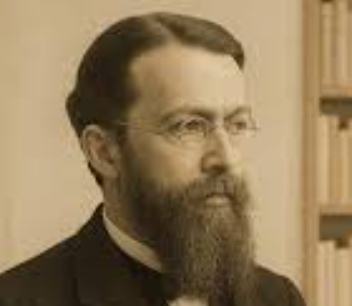
Carl Menger (1840–1921) was a celebrated Austrian economist and jurist, universally recognized as the sole founder of the Austrian School of Economics and one of the three pillars of the Marginalist Revolution (together with William Stanley Jevons and Léon Walras) that permanently transformed economic science in the 1870s.
1. Life and Intellectual Trajectory
Carl Menger was born in Neu-Sandez, Galicia (then part of the Austro-Hungarian Empire, today Poland), into a well-off family of jurists and military officers. Following the family tradition, he studied Law at the universities of Prague and Vienna, and later obtained a doctorate in jurisprudence at the University of Kraków.
In the late 1860s, while working as an economic journalist and market editor for the official newspaper Wiener Zeitung in Vienna, Menger made a crucial observation that would change the course of his career: the theoretical explanations of classical economics (Adam Smith, David Ricardo) of how prices were set did not fit empirical market reality at all. Day-to-day commodity prices did not depend on production costs or accumulated hours of labor, but on the valuations of actual buyers.
Motivated by this mismatch between theory and practice, he began independent research that culminated in 1871 with the publication of his masterwork: Principles of Economics.
His theoretical brilliance earned him recognition in circles of power. In 1876 he was appointed tutor to Crown Prince Rudolf of Habsburg, son of Emperor Franz Joseph I. Menger accompanied the young archduke on instructional travels through Western Europe and delivered lectures on political economy that shaped the prince’s thought. Later he obtained the chair of Political Economy at the University of Vienna, where he taught until his retirement in 1903. Menger spent his last years withdrawn into his immense library, dying in 1921 in a Vienna devastated by the aftermath of the First World War and the fall of the Empire he so loved.
2. Work and Fundamental Theoretical Contributions
Menger did not seek to formulate abstract mathematical models, but to understand the causal laws and ultimate foundations of individuals’ action in the market. His key contributions fall into three areas:
A. Principles of Economics (1871) and the Revolution of Value
In this treatise, Menger refounded microeconomics through three interconnected concepts:
- The Subjective Theory of Value: Menger demolished the classical labor theory of value (also defended by Karl Marx). He argued that value is not an intrinsic property of goods nor is it determined by the cost of producing them. Value is purely subjective: it is born in the mind of the individual, who assigns importance to a good according to the capacity he perceives in it to satisfy a specific need.
- Marginal Utility: Although the exact term would later be popularized by his disciple Friedrich von Wieser (Grenznutzen), Menger formally resolved the famous “water–diamond paradox.” He explained that human beings do not evaluate the utility of a good “in general” (for example, all the water on the planet), but decide on the basis of concrete units. The value of a good is determined by the utility provided by the last available unit (the marginal unit), which is devoted to covering the least urgent need.
- The Structure and Order of Goods: He classified goods according to their proximity to final consumption:
- Goods of the first order: Direct consumption goods that satisfy an immediate need (e.g., a piece of bread).
- Goods of higher orders: Capital or production goods necessary to manufacture first-order goods (e.g., flour is second order, wheat third order, the plow fourth order). Menger demonstrated a fundamental rule: the value of higher-order goods (factors of production) is derived from the subjective value that the final consumer assigns to the first-order good that these help to produce, and not the reverse.
B. The Evolutionary Origin of Money (1892)
Before Menger, it was commonly believed that money had been created by a government decree or a deliberate social contract. Menger offered a purely evolutionary and spontaneous explanation: money arose organically from barter. Individuals realized that it was very difficult to exchange goods directly (lack of double coincidence of wants), so they began to exchange their products for more marketable or liquid goods (such as salt, cattle, gold, or silver). Over time, the market spontaneously selected the most efficient commodities, transforming them into money.
C. Investigations into the Method (1883) and the Methodenstreit
Menger published a methodological book that unleashed the famous “Battle of the Methods” (Methodenstreit) against the German Historical School, led by Gustav von Schmoller. While the Germans held that economics could only be studied by accumulating local historical and descriptive data, Menger firmly defended the validity of the theoretical-deductive method. He coined the principle of methodological individualism, holding that macroeconomic or collective phenomena can only be understood if one analyzes the logical laws that govern the decisions of particular individuals.
Critiques and responses to his ideas
Carl Menger’s revolutionary ideas broke into late nineteenth-century Europe with such force that they simultaneously challenged the two great academic blocs of the age: the historical tradition dominant in Germany and the emerging mathematical current in other European centers.
Below are the three main critiques he faced and how he articulated his responses in defense of the birth of the Austrian School of Economics:
1. The Methodological Critique: The Methodenstreit (German Historical School)
This was the most heated and lasting dispute of his life, known as the “Battle of the Methods” (Methodenstreit). Menger’s main detractor was Gustav von Schmoller, leader of the influential German Historical School.
- The critique: Schmoller and his followers harshly attacked Menger’s Principles of Economics, arguing that economics did not possess “universal laws” valid for all times and places. From their holistic and nationalist perspective, economic phenomena were strictly subordinated to the culture, language, historical institutions, and particular spirit of each nation. They accused Menger of reviving the “sterile and unreal abstraction” of the British classical economists (such as Ricardo), divorced from regional empirical and statistical data.
- Menger’s response: In 1883, Menger published a second treatise focused exclusively on methodology: Investigations into the Method of the Social Sciences. In it he formally defended methodological individualism. Menger argued that social collectives or macroeconomic aggregates (such as “the nation” or “the State”) do not act by themselves, but are the result of the actions and valuations of individual human beings. He held that, although economic history compiles the empirical data of the past, economic theory has the independent task of discovering fundamental, causal, and invariable logical laws that govern scarcity and human action in any civilization.
2. The Formal Critique: The Rejection of Mathematics (Neoclassical Marginalists)
Although Menger shares with William Stanley Jevons and Léon Walras the title of father of the Marginalist Revolution, their methods were radically different.
- The critique: Economists of the mathematical and neoclassical tradition criticized Menger because his theories lacked equations, algebraic formulas, or differential calculus. They considered his purely logical and qualitative approach an “imperfect” or imprecise version of microeconomics that did not reach the scientific rigor of the general-equilibrium models Walras was designing.
- Menger’s response: Menger deliberately rejected mathematical formalism in a conscious way. He argued that the real market is never in a situation of “perfect static equilibrium” of the kind mathematics sought to simulate. On the contrary, the market is always in dynamic disequilibrium. For Menger, the use of mathematics committed the serious error of assuming that the human being is an omniscient and perfectly rational homo oeconomicus. In the Mengerian reality, the human being acts immersed in uncertainty, the passage of time, and imperfect knowledge, constantly making mistakes. He held that symmetrical equations concealed the true essence of economics, which requires an analysis of unidirectional causal relations: value is born in the human subject and moves toward things—a qualitative and subjective process impossible to encapsulate in continuous numerical functions.
3. The Ideological and Political Critique: Defenders of Labor Value (Socialists and Marxists)
The rise of the subjective theory of value collided head-on with the collectivist theories that were gaining immense political ground at the end of the nineteenth century.
- The critique: Socialist thinkers and followers of classical economic theory held that the value of things should be measured “objectively” by the production costs incurred or the hours of labor physically accumulated in the good. They considered Menger’s radical Subjectivism a “bourgeois psychological theory” designed to delegitimize workers’ claim to the full fruit of their labor and to defend capitalists’ profits.
- Menger’s response: Menger destroyed the logical basis of this critique by showing that value does not travel from the past to the present, but from the future to the present. He explained that an entrepreneur may spend millions of hours of labor and resources producing a good (higher-order goods), but if in the end consumers do not desire it (first-order goods), that product will be worth absolutely zero. The cost of production is not the creator of value; rather, it is the subjective valuations that consumers place on the future final good that determine how much value is assigned to the machinery, land, and labor necessary to make it. With this, Menger scientifically shielded the free market against theories of exploitation and centralized planning.
Menger’s Legacy
Carl Menger’s legacy is the foundation on which all modern libertarian and free-market thought was built:
- Seed of the Austrian School: Although Menger wrote his works in isolation, his chair in Vienna attracted brilliant minds. He directly formed the “second generation” of the Austrian School, headed by Eugen Böhm-Bawerk and Friedrich von Wieser. They, in turn, were the teachers of third- and fourth-generation figures such as Ludwig von Mises and Nobel Prize winner Friedrich A. Hayek.
- Precursor of Spontaneous Order: His analysis of the origin of money served as a fundamental model for later thinkers (especially Hayek) to develop the theory of spontaneous social institutions. Menger showed that the most complex and functional structures of human civilization—such as money, language, law, and the market itself—do not require a central planner or a government to design them; they emerge organically from the voluntary interactions of millions of people.
- Scientific defense of the Free Market: Menger did not defend the free market on the basis of political slogans or abstract dogmas, but by reconstructing economic theory from its purest human bases. By placing the human being, his needs, and his knowledge at the epicenter of economics, he shielded the logic of individual liberty against the attacks of the collectivism of his time.
This article is part of the Basic Course on Libertarianism and the Austrian School of Economics-> Module 4: Main Schools of Economics
| Previous topic | Next related topic | |
|---|---|---|
| <- Frédéric Bastiat (1801–1850) | <---> | Eugen von Böhm-Bawerk (1851–1914)-> |
Last updated: 2026-05-16
| | | |
This site was written based on publicly available free articles from the internet.
The content of this site is available under the: Creative Commons Attribution 4.0 International (CC BY 4.0) license.
You can freely copy, redistribute and modify the material, as long as the source is mentioned: liberwiki.com