


Spontaneous Order
This article is part of the Basic Course on Libertarianism and the Austrian School of Economics-> Module 5: Austrian Economics and Free Market
Last updated: 2026-07-24
Note: The following 3 concepts are inseparable; speaking of one directly implies speaking of the other.
- Dispersed knowledge
- Spontaneous order
- Economic calculation
Spontaneous order
It is one of the foundational concepts of the Austrian School of Economics.
Spontaneous order is one of the deepest and most central concepts of the Austrian School of Economics, developed especially by Friedrich Hayek (and with roots in Carl Menger, the founder of the school).
Definition:
Spontaneous order is a complex and highly functional pattern of social cooperation that arises without anyone having intentionally designed it.
It arises from the free interaction of thousands or millions of individuals who pursue their own ends (selfish or not), using dispersed knowledge that is fragmented and that no one can possess in its entirety. The result is an order that is more efficient and adaptive than any order imposed centrally.
It is not chaos, nor is it a constructed order (like the one a central authority tries to impose).
It is a self-generated order that forms from abstract rules of conduct (mainly rules of private law: property, contract, liability), which allow extended cooperation among strangers.
Hayek contrasts it with made order (taxis) —the one designed by an organizing mind— and calls it cosmos or spontaneous order.
This order is far more complex than any human mind can encompass because it uses the dispersed knowledge that is distributed among millions of people and that can never be centralized.
Humanity’s most complex and efficient institutions are the result of human action, but not of human design.
They arise in a decentralized way when individuals follow simple rules of conduct in their local environments, adapting to the dispersed knowledge that no one possesses in its entirety.
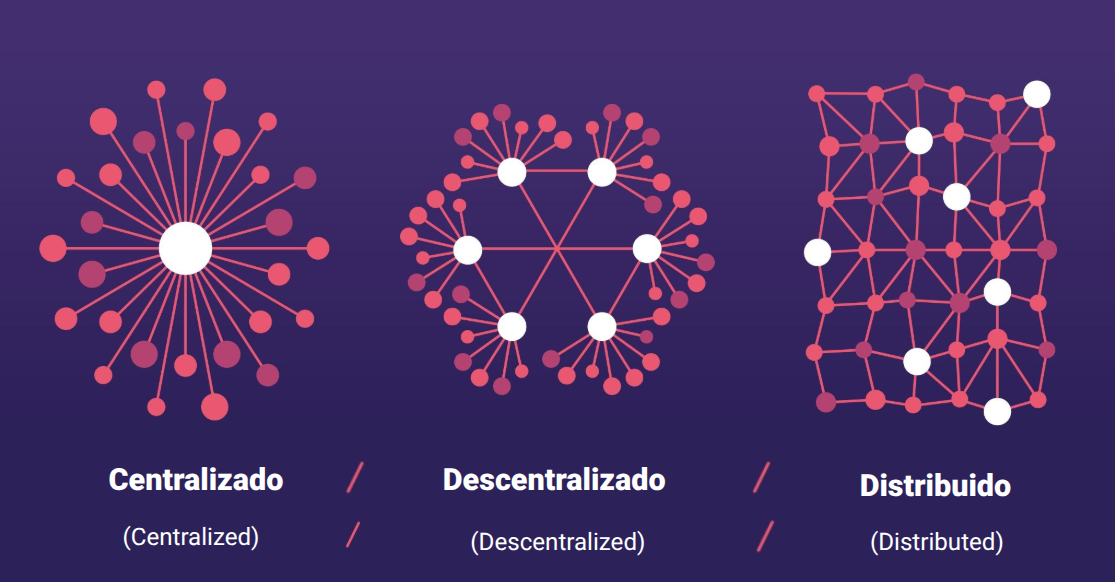
Examples
1. The price system in the market economy (the economic example par excellence)
Imagine a sudden scarcity of a rare mineral used in electric-car batteries. No bureaucrat or central committee knows exactly how much, where, and for what it is needed. Yet the price of that mineral rises immediately.
- Consumers who can do without it reduce their use.
- Producers look for substitutes or increase production where it is profitable.
- Innovators develop alternative technologies.
- Savers direct capital toward the firms that best solve the problem.
All of this happens without anyone ordering “Reduce consumption by 12%!” or “Build three new mines in such-and-such a place!”
Price acts as a “signaling system” that coordinates the dispersed knowledge of millions of people.
That is spontaneous order in action. When the State intervenes with price controls or subsidies, it distorts those signals and destroys part of that order.
Ultimately, if the sought-after good is very expensive it can still be obtained because stock of it exists. Under other systems, it would simply be impossible to obtain.
2. The evolution of money as a spontaneous institution
Money was not invented by a king or by a brilliant economist at a design table. It arose spontaneously throughout human history.
In different civilizations, certain commodities (cattle, precious metals, finally gold and silver) were selected by the same people who traded because they possessed the best properties as a medium of exchange: divisibility, portability, durability, relative scarcity, and accepted subjective value.
No one planned “we are going to create an institution called money.” Simply, those who used the more “monetary” goods had an enormous competitive advantage in exchange.
Gold and silver ended up being money not because someone decreed it, but because they survived the spontaneous evolutionary process of cultural selection (similar to natural selection in biology, a concept Hayek deeply admired).
When States end up monopolizing the issuance of money and manipulate it, they are replacing a highly efficient spontaneous order with a constructed order that generates economic cycles, inflation, and loss of value.
| Dimension | Centralized System | Spontaneous System (Market / Evolution) |
|---|---|---|
| Information Flow | Vertical and slow (subject to statistical bottlenecks). | Horizontal, instantaneous, and decentralized (Prices / Chemical signals). |
| Adjustment Mechanism | Coercion and rigid bureaucratic mandates. | Constant adaptation to circumstances of time and place. |
| Resilience | Fragile. If the planner’s head fails, the system collapses. | Robust. If one part fails, local agents recalculate and adapt immediately. |
This article is part of the Basic Course on Libertarianism and the Austrian School of Economics-> Module 5: Austrian Economics and Free Market
| Previous topic | Next topic | |
|---|---|---|
| <-Dispersed knowledge | <--> | Price mechanism-> |
Last updated: 2026-07-24
| | | |
This site was written based on publicly available free articles from the internet.
The content of this site is available under the: Creative Commons Attribution 4.0 International (CC BY 4.0) license.
You can freely copy, redistribute and modify the material, as long as the source is mentioned: liberwiki.com