


Summary of the Basic Course on Libertarianism
This article is part of the Basic Course on Libertarianism and the Austrian School of Economics
Last updated: 2026-07-02
Free Market and Psychology
- Freedom and responsibility are two sides of the same coin.
Free Market: Emotional maturity, Evolution, and Prosperity
-
In the Free Market people are forced to take full responsibility for their lives.
-
It is not that the market “forces you” in the coercive sense of the State. It is subtler and more powerful: it removes the artificial shields that other systems place between your actions and their results.
-
In the Free Market people must project into the future, evaluate opportunity costs, choose, and, fundamentally, own the consequences of their mistakes.
-
It is precisely this process of trial, error, and assumption of costs that allows the development of the adult mind, foresight, and the postponement of gratification (which are 2 traits of adulthood).
-
The Free Market respects the sovereignty of the rational human mind; it gives dignity to the person by obliging them to mature, to make better decisions, and consequently to “Prosper”.
-
Humanity’s passage from a tribal life to an advanced civilization required a painful adaptive maturation: learning to restrain tribal instincts of coercive redistribution and to adopt abstract norms of conduct (respect for private property, fulfillment of contracts with complete strangers).
- The Free Market demands an adult psychology because it obliges us to operate in an abstract and decentralized system, where there is no “protective father” who guarantees the outcome, but clean rules of the game that we must navigate under our own responsibility.
Collectivism: Infantilism, Dependency, and Tribalism
-
Collectivism, in all its variants, by claiming that a board of planning bureaucrats should decide society’s ends, strips the citizen of autonomy. By “protecting” them from vicissitudes and from their own bad decisions, it amputates their capacity for learning and foresight, confining them to perpetual infantilism and dependency, which destroys the character and psychological resilience of the population.
-
Collectivism operates as a disease that induces psychological and institutional regression, cultivating an infantilized, fragile population, frightened of uncertainty and dependent on the State.
-
Modern Collectivism (statism, socialism, social democracy, etc.) is highly seductive because it activates an evolutionary mismatch in our brain.
- It activates the primitive brain of the human being, which longs for the security of the primal tribe where a paternalistic figure (the State) provides and decides.
- Recommending submission to the Central Planner is, psychologically, a regression to the infancy of the species.
Free Market and the price mechanism
-
Note:
- Whenever we say the word “products,” we mean goods and services. We will use the word “products” alone so as not to be repetitive.
-
We start from the premise that products are scarce, while people’s desires and valuations are unlimited.
- This situation forces people to choose continuously among alternatives, forgoing other options.
- When a society respects freedom and private property, the Dispersed knowledge of millions of individuals allows a Spontaneous order to emerge.
- The less freedom and private property are respected, the less free the “Free Market” is, and it does not generate products at its maximum capacity (explained later).
- This Order gives rise to the Free Market, where entrepreneurs offer products they believe others will value.
- In this Free Market, each person chooses in a subjective and sovereign way which products they wish to acquire, buying or rejecting according to their own valuations.
- From these purchase choices (approvals or rejections) prices arise, which reflect how much people value those products and how scarce they perceive them to be.
- Prices act as signals that allow entrepreneurs to perform Economic calculation: they evaluate whether it pays to produce more or less of certain products according to expected profitability.
- Products with high prices indicate that they are scarce and highly valued, which creates incentives for more entrepreneurs to direct resources toward their production in search of profits.
- These capital investments increase productivity and generate greater abundance of those products.
- As products become more abundant, entrepreneurs compete by improving quality, offering varieties, and differentiating their products. This generates a greater diversity of qualities and prices.
- Competition and abundance tend to reduce relative prices over time.
- When prices fall due to greater supply, the profit from producing more of those same products decreases. This signal leads entrepreneurs to reallocate resources and innovate in new products or improvements that people value more and buy.
Over time, this process allows the population to access:
- higher-quality products at lower prices
- greater labor productivity and, consequently, better material conditions
- in short, more wealth and less poverty.
The efficiency of the Free Market
The Free Market and the Price mechanism are not perfect. They do not guarantee that at every moment and place exactly the products each person desires are available, nor that prices are always affordable for everyone. It may happen that products are temporarily missing, that they are too expensive for some, or that no entrepreneur offers them yet.
However, the Free Market possesses an error-correction mechanism that no centralized planning system has managed to match: its capacity to discover and resolve mismatches quickly thanks to Dispersed knowledge and Spontaneous order.
In a free market, when a product becomes scarce or its price rises, that signal generates profit opportunities. Some entrepreneurs, attentive to those signals, discover that they can obtain benefits by offering that good where others do not or cannot. This search for profit mobilizes resources, attracts capital, and stimulates production, generating employment indirectly.
It is not an automatic or instantaneous process, but a process of entrepreneurial discovery that, over time, tends to reduce shortages and increase the availability of goods.
This correction mechanism has a unique power: instead of generating chronic scarcity, competition among firms and the search for profits constantly push toward greater variety and abundance of products.
The historical result of this process has been extraordinary. For thousands of years, from the Neolithic until the end of the 18th century, the vast majority of humanity lived in conditions of extreme poverty.
With the expansion of market institutions —especially private property, freedom of contract, and trade— a sustained process of wealth creation began that is unprecedented in human history.
Market “redistribution”
The word “redistribution” is misleading, because it implies that “someone” redistributes the products that others generate; it implies Collectivism. Here the title is used ironically to show the concept from the Free Market point of view.
In the Free Market goods are not distributed according to needs. Resources are allocated according to individuals’ subjective valuations expressed through their willingness to buy them.
This means it is likely that part of the population will not “be able to pay” and will “temporarily” not access those products. The point to keep in mind here is:
The greater the degree of Free Market:
- Opportunities to prosper are higher and easier to access.
- The poorest can access a greater quantity of better-quality and cheaper products than those in societies with less freedom.
- In many countries there exist and have existed organizations that donate products given by the rest of the population, mutual-aid societies, churches, and private philanthropy.
- Nothing prevents the government itself from implementing some form of social assistance (this is accepted under classical libertarianism).
- Remember that for the Austrian School of Economics → The best “social policy” is sustained economic growth that generates employment and real income.
Against what to compare the efficiency of the Free Market
Although pure capitalism never existed, the societies that most allowed private property and voluntary exchange were those that drastically reduced poverty and massively raised the standard of living.
The period closest to the ideal was Great Britain between 1815 and 1870–1880 (after Napoleon’s defeat and the repeal of the Corn Laws in 1846) and, to a lesser extent, the United States between 1789 and 1913 (before the Federal Reserve and Progressivism).
Even versions of the Free Market partially intervened by the State proved extraordinarily powerful at generating wealth and coordinating the dispersed knowledge of millions of people. No other consciously designed economic system has achieved comparable results.
Perhaps what has been described so far about the “Free Market” seems little; the point is that to understand well what the “Free Market” is, one must compare it with its opposite → “Collectivism in all its forms”.
The description of Collectivism is a very long topic set out in the Intermediate course on Libertarianism and the Austrian School of Economics; however, here we leave ideas about the consequences of collectivist ideas.
Note:
- The Free Market never generated famines; on the contrary, Collectivism did.
- Since the problems generated by Collectivism in its various forms (Mercantilism, Communism, Fascism, Keynesianism, etc.) are very large, below we show in separate links a list of the problems generated.
Inefficiency and waste of resources from Marxist ideas
Inefficiency and waste of resources from Marxist and Keynesian ideas
Slavery generated by Mercantilism
Examples of Famines generated by Marxism
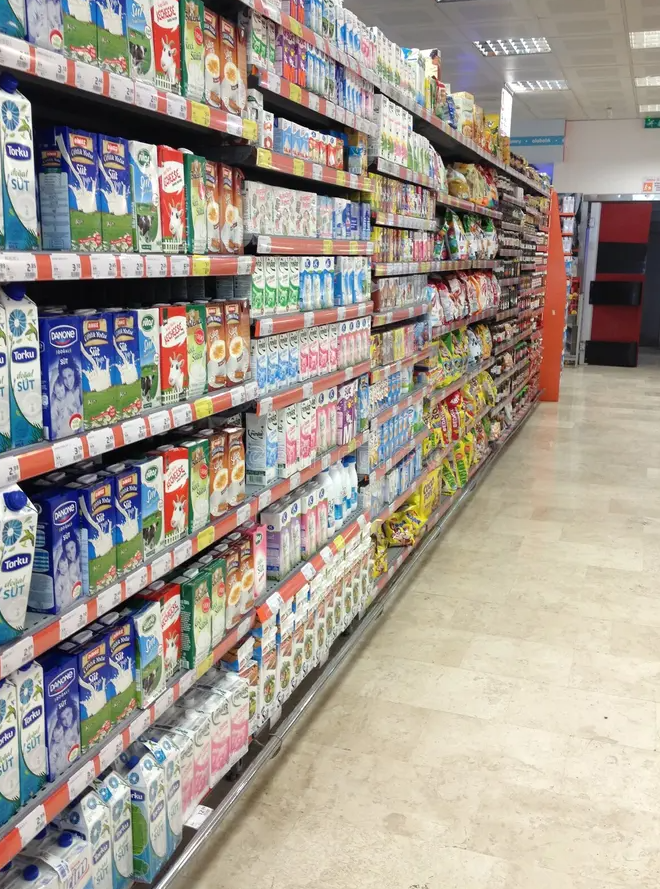
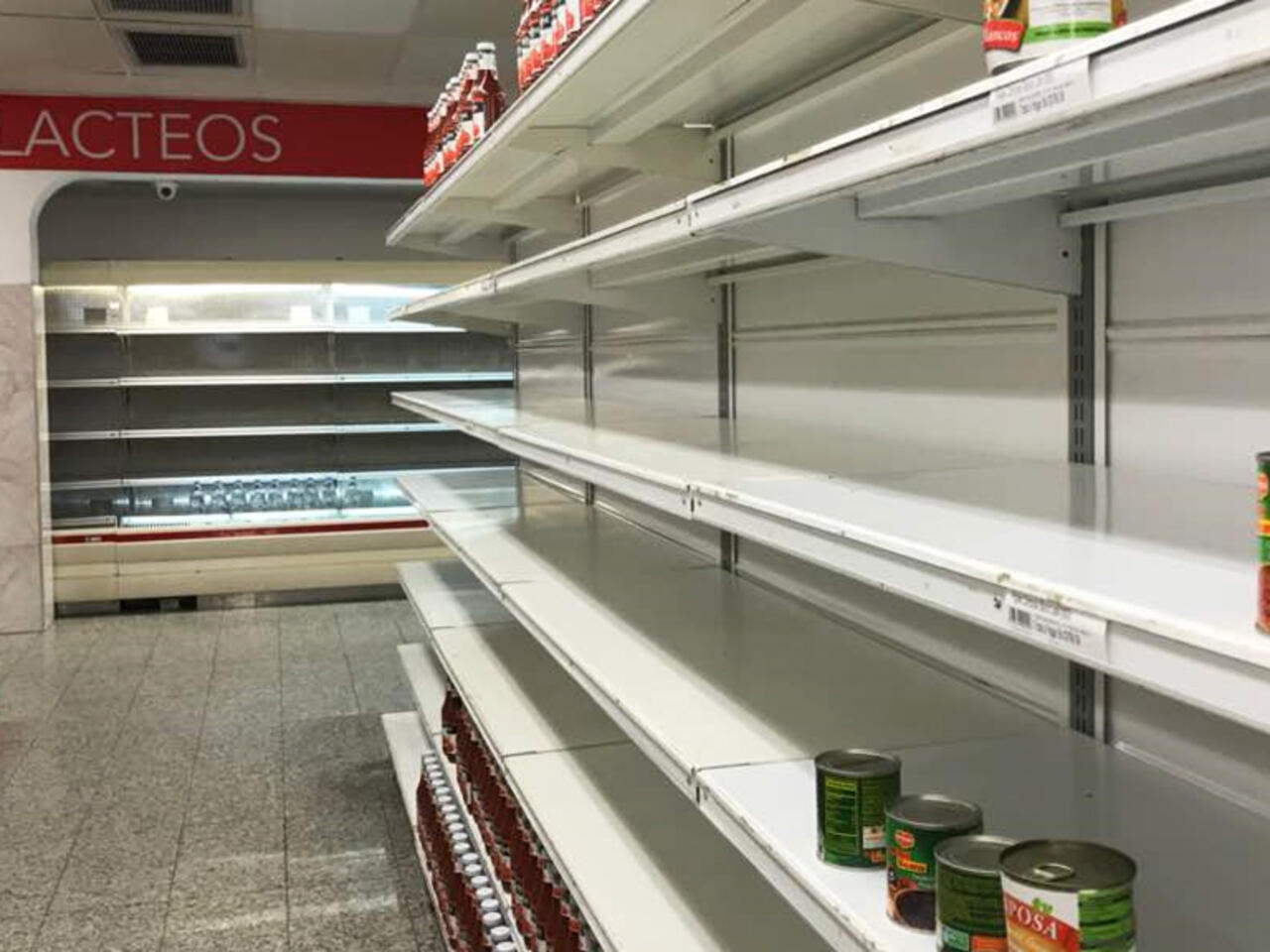
The results are plain to see:
| Free market | Communism |
|---|---|
 |
 |
To continue with the detailed contents go to → Basic Course on Libertarianism and the Austrian School of Economics
Last updated: 2026-06-26
| | | |
This site was written based on publicly available free articles from the internet.
The content of this site is available under the: Creative Commons Attribution 4.0 International (CC BY 4.0) license.
You can freely copy, redistribute and modify the material, as long as the source is mentioned: liberwiki.com